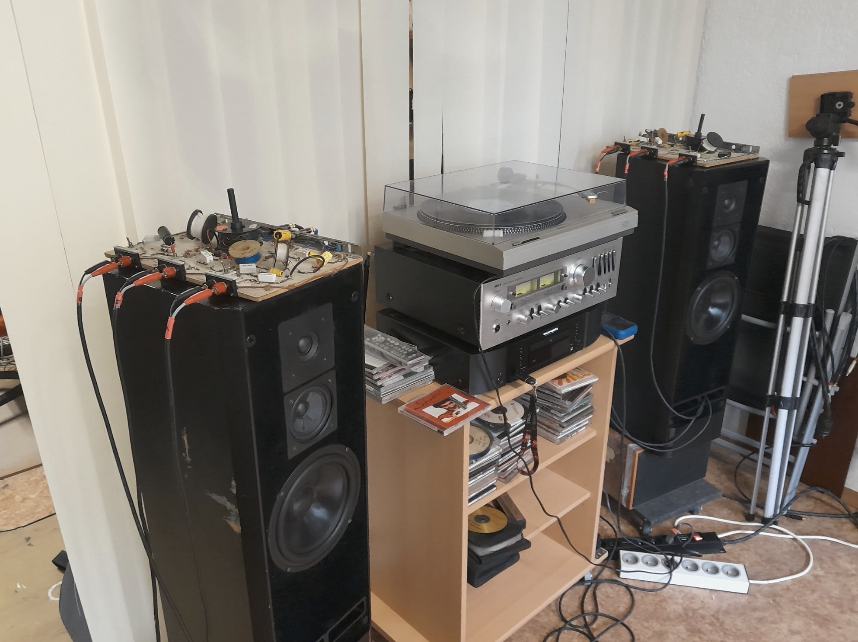
Speaker system modifications
The final—and most important—part of the audio chain, along with the listening space…



Modifying speaker systems can eliminate flaws—particularly in frequency response—that are often attributed to various other, usually “pseudo,” factors while overlooking the fundamental nature and purpose of the speakers themselves. Below are some typical examples involving changes of up to 10%.
Endless tinkering with cables.
This invariably leads to a dead end and wastes both time and money. While cables do function, the basic sound signature changes only slightly (why should it change drastically?), and the underlying problem remains unresolved.
Compatibility (or lack thereof) with a specific amplifier.
It goes without saying that a particular amplifier-speaker combination might not subjectively yield the expected results.
The quality of crossover components.
To put it very simply: if there is a peak in a specific frequency range—which is almost the norm—no “exotic” or exorbitantly expensive capacitor or inductor will alter that frequency response characteristic. The same applies to replacing internal wiring or relocating the crossover outside the speaker cabinet. While the sound might well change slightly after such a swap (as is often expected), the core problem persists; the peak or elevation in the response remains. Of course, in older speaker systems—especially vintage models—it is necessary to replace aging components with modern ones that meet the specified parameters.
From my own experience, I know that 90% of the resulting sound is determined by the quality (and balance) of the speakers and their placement within the listening area.
90% versus 10%.
The process involves acoustic measurements of the speaker systems, solution design, simulation, adjustments, and final listening tests.
MEASUREMENT AND SOFTWARE EQUIPMENT USED